

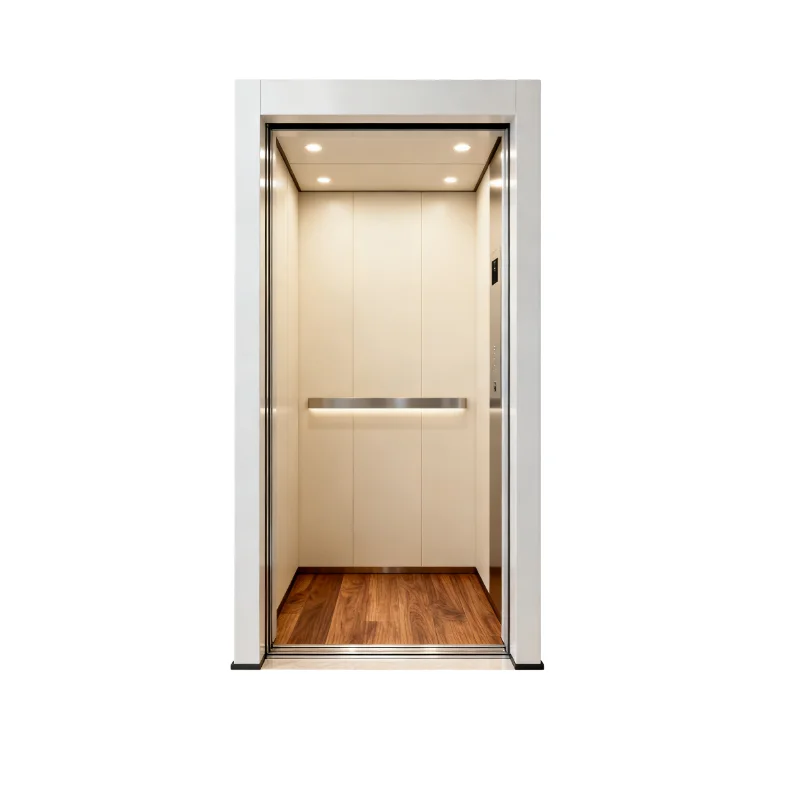
When homeowners start planning for safer, easier access between floors, two of the most common solutions are a home elevator and a stair lift. Both products are designed to improve mobility, support aging in place, and make multi-story homes more comfortable and accessible. However, they are not the same in terms of design, installation, cost, space requirements, user experience, and long-term value.
If you are comparing home elevator vs stair lift, the best choice depends on your mobility needs, property layout, budget, long-term goals, and aesthetic preferences. This guide explains the differences in detail, covering definitions, benefits, limitations, technical specifications, safety features, installation considerations, and common use cases. It is written for homeowners, builders, architects, accessibility planners, and readers looking for clear, SEO-friendly information on Residential Elevators and stair lifts.
A home elevator is a residential vertical transportation system designed to carry people, and sometimes small items, between floors of a house. Unlike commercial elevators, a residential elevator is typically smaller, more compact, and designed for private homes. It can be installed in new construction or retrofitted into an existing house, depending on the shaft space, structural conditions, and local building code requirements.
Home Elevators are often chosen for convenience, luxury, accessibility, and future-proofing. They can accommodate users seated in wheelchairs, walkers, or with limited mobility, depending on the cab size and door configuration. Many homeowners also value the added property appeal and comfort that a residential elevator provides.
A stair lift is a motorized chair or platform that travels along a rail mounted to a staircase. It is designed to help people move safely up and down stairs without needing to climb them. Stair lifts are commonly used by older adults, people recovering from surgery, and individuals with mobility limitations.
Stair lifts are usually installed more quickly and at a lower cost than a home elevator. They are especially practical in homes where there is not enough space or budget for a full elevator installation. Because they are mounted directly onto the staircase, stair lifts are often considered one of the most accessible and affordable home mobility solutions.
| Feature | Home Elevator | Stair Lift |
|---|---|---|
| Main Function | Moves people vertically between floors inside a cab | Transfers a seated user along a staircase rail |
| Installation Space | Requires shaft, pit, overhead clearance, or dedicated structural space | Requires space on the staircase and landings |
| Typical User | Homeowners seeking full-floor access, wheelchair access, or future-proofing | Individuals who can transfer to a seat and need stair assistance |
| Accessibility | Better for wheelchair users and higher mobility support | Best for users who can sit and transfer independently or with help |
| Installation Time | Usually longer, especially in retrofits | Usually faster, often measured in hours or a few days |
| Cost Range | Generally higher | Generally lower |
| Design Impact | Can become part of the home’s architecture and style | More functional, less visually integrated |
| Capacity | Can support multiple users or wheelchair access, depending on model | Typically one seated user at a time |
| Long-Term Value | May add broader resale appeal and aging-in-place value | Improves mobility but usually less impact on property value |
The most important difference in the home elevator vs stair lift comparison is accessibility. A home elevator offers a higher level of access because it can transport a user inside a cab, often with a wheelchair, walker, or caregiver assistance. This makes it a strong solution for people with limited lower-body strength, balance concerns, or progressive mobility conditions.
A stair lift, by contrast, requires the user to sit in a chair mounted to a rail. In most cases, the user must be able to transfer from a wheelchair or standing position into the lift seat. For many people, this is not a problem. But for users with significant mobility impairments, a stair lift may not provide enough independence.
A home elevator typically needs more space than a stair lift. Depending on the model, installation may require a hoistway, machine space, structural reinforcement, and clearances for entry and exit. This is why home elevators are often easier to include during new construction than to add later in a finished home.
Stair lifts have much lower space requirements because they are mounted directly to the staircase. However, the staircase must still be wide enough to allow safe passage when the lift is parked, and curved stairs may require a custom rail system. In narrower homes, stair lifts are often the more practical solution when space is limited.
The installation of a home elevator is usually a larger project. It may involve structural work, electrical work, permits, inspections, and coordination with contractors. Retrofitting an elevator into an existing home may take more planning and time.
Stair lift installation is generally simpler. Straight stair lifts can often be installed quickly with minimal disruption to the home. Curved models take longer because the rail must be custom fabricated to match the staircase. Still, even a custom stair lift is typically less complex than a residential elevator project.
Cost is one of the biggest factors in deciding between a home elevator and a stair lift. In general, stair lifts are the lower-cost option, making them attractive for homeowners who need a practical mobility upgrade without a major renovation budget.
Home elevators usually cost significantly more because they require a more complex mechanical system, structural modifications, and design integration. While they represent a larger investment, many homeowners see them as a long-term improvement that can enhance everyday convenience and the overall usability of the home.
A home elevator generally offers a more comfortable and private experience. The user can stand, sit, or ride in a wheelchair depending on the cab size. The ride is also perceived as more similar to a standard elevator, which many users find intuitive and dignified.
A stair lift offers a simple seated ride but may feel more exposed because the user is traveling along an open staircase. For some users, this is perfectly acceptable. For others, especially those who feel anxious on stairs or need more support, a home elevator may be preferable.
Even though a home elevator provides excellent accessibility, it is not the right solution for every property. The main limitations include higher installation costs, greater design complexity, and the need for suitable structural space. In some older homes, adding an elevator may require major renovation work.
Maintenance is another factor. A residential elevator generally requires periodic service to keep the system operating safely and smoothly. Homeowners should also consider local code compliance, emergency features, and power backup options when planning the project.
Stair lifts are highly practical, but they are not a complete accessibility solution for everyone. The biggest limitation is that users must typically transfer into the seat. This may be difficult or impossible for people who use wheelchairs full-time.
Stair lifts are also staircase-dependent. If the stairs are too narrow, overly steep, or highly complex, installation may be challenging. In some homes, the rail may reduce usable stair width, which could be inconvenient for other household members.
| Specification | Home Elevator | Stair Lift |
|---|---|---|
| Typical Capacity | Varies by model; often supports one or more passengers plus mobility devices | Usually one person seated at a time |
| Travel Path | Vertical between floors through a shaft or enclosed system | Along a staircase rail following the stair angle |
| Power Source | Electric motor system; may include hydraulic or traction components | Electric motor with battery backup on many models |
| Installation Area | Dedicated vertical space in the home | Mounted directly to staircase treads or structure |
| Average Project Scope | Moderate to extensive | Limited to moderate |
| Accessibility Level | High | Moderate to high for seated users |
| Customization | High, including cab size, finish, doors, and lighting | Moderate, including seat style, rail shape, and upholstery |
| Maintenance Needs | Regular inspections and scheduled servicing | Routine maintenance and battery checks |
For many homeowners planning for aging in place, the decision between a home elevator and a stair lift depends on expected future mobility changes. If a user currently only needs support for walking up stairs and can still transfer safely, a stair lift may be sufficient and cost-effective.
If mobility is expected to decline over time, or if wheelchair use is likely, a home elevator can be the more future-ready solution. It provides broader usability and reduces the chance of needing another upgrade later. This is one reason residential elevators are increasingly discussed in long-term accessibility planning.
In almost every standard comparison, a home elevator is better for wheelchair users than a stair lift. A stair lift usually requires transferring out of the wheelchair into the seat. A home elevator, however, can often accommodate wheelchair entry and exit directly, depending on cabin dimensions and door design.
For users who want independent movement without transfer assistance, a residential elevator is generally the superior choice. Some specialized platform lifts may also be used in certain homes, but when comparing the two main options, the home elevator has the clear advantage for wheelchair accessibility.
For smaller homes, a stair lift often wins on practicality because it requires less structural modification and uses existing staircase space. If the goal is to restore access quickly and affordably, a stair lift can be the simplest answer.
That said, some Compact Home Elevator designs are specifically created for smaller residential footprints. If the property can support the necessary structural work, a compact elevator may still be feasible. The right answer depends on stair layout, floor plan, ceiling height, and available installation zone.
In new construction, a home elevator often becomes more attractive because the home can be designed around the lift from the beginning. This makes it easier to integrate the shaft, electrical system, and cab size without sacrificing existing space. New build projects also allow greater flexibility in design and finish selection.
Stair lifts are usually not the first choice in new construction unless the need is temporary, budget-driven, or very specific. For long-term accessibility and resale value, a residential elevator may be the preferred option in a custom home or high-end build.
For an existing home, the better choice depends on the home’s structure and the homeowner’s mobility needs. If the staircase is suitable and the user only needs seated assistance, a stair lift is typically easier to install and less invasive.
If the homeowner wants a more complete accessibility solution, has a wheelchair-access need, or is planning for aging in place over many years, a home elevator may be worth the additional investment and remodeling effort.
When comparing home elevator cost vs stair lift cost, it is important to look beyond the purchase price. Total project cost may include installation, electrical upgrades, structural work, permit fees, finishing materials, and ongoing maintenance.
| Cost Factor | Home Elevator | Stair Lift |
|---|---|---|
| Initial Purchase | Higher | Lower |
| Installation Labor | Higher, often multi-trade work | Lower, usually simpler labor |
| Home Modifications | May be significant | Usually minimal |
| Permits and Inspections | More likely required | May be required depending on location |
| Maintenance | Regular professional servicing | Routine servicing and battery replacement |
| Long-Term Value | Potentially stronger | Functional but usually lower impact |
Home elevators often offer strong visual appeal. They can be designed with glass panels, custom finishes, modern lighting, and decorative doors that complement the interior architecture. For some homeowners, this makes the elevator feel like part of the home rather than a medical device.
Stair lifts are typically more visible as assistive equipment. While modern stair lifts can look neat and compact, they are usually less integrated into the home’s design. Homeowners who prioritize a sleek, architectural appearance may prefer a residential elevator if the budget and space allow.
Both systems require maintenance, but the nature of that maintenance differs. A home elevator usually needs periodic inspection of mechanical components, safety systems, controls, and ride performance. Proper servicing helps extend lifespan and maintain reliable operation.
Stair lifts also require regular upkeep, especially battery checks, rail cleaning, sensor testing, and motor inspection. In general, both products can last many years if properly installed and maintained, but the service needs of a home elevator are more involved.
The best way to decide between a home elevator and a stair lift is to evaluate your daily use, mobility level, and home structure. Ask the following questions:
There is no universal winner in the home elevator vs stair lift debate. The better choice depends on the homeowner’s situation. If the goal is low-cost, quick, and practical stair access for a seated user, a stair lift is often the better choice. If the goal is long-term accessibility, wheelchair compatibility, improved comfort, and broader home usability, a home elevator is usually the stronger solution.
In simple terms:
This topic is commonly searched using terms such as home elevator vs stair lift, residential elevator, stair lift for home, accessible home solutions, aging in place, wheelchair elevator, stair lift installation, and home mobility equipment. Including these related phrases naturally throughout a page can help search engines better understand the content theme and intent.
Both home elevators and stair lifts are valuable accessibility solutions for multi-level homes. A stair lift offers a practical and affordable way to reduce stair-related risk, while a home elevator provides a more complete, versatile, and future-proof mobility upgrade. The right choice depends on the user’s mobility level, the home’s structure, the available budget, and long-term living plans.
If you are creating a blog post, directory page, industry article, or accessibility guide, this comparison can serve as a strong foundation for SEO-friendly content on residential mobility solutions. By focusing on keywords like home elevator vs stair lift, residential elevator benefits, and stair lift advantages, you can build a highly relevant page that supports user intent and search visibility.
```
This website uses cookies to ensure you get the best experience on our website.
 ไทย
ไทย Indonesia
 Tiếng Việt
 Filipino



 Phone
Phone
Comment
(0)