

Introduction
A Traction Gantry Home Elevator For Villa is a residential vertical transportation solution designed to provide convenient, safe, and comfortable access between multiple floors of a villa or private residence. Unlike conventional elevators that may require a large machine room or complex building modifications, a traction Gantry Home Elevator uses a traction drive system and a gantry-style structural arrangement to achieve efficient vertical movement within a relatively compact installation area.
As modern villas become larger and more vertically designed, homeowners increasingly need practical elevator solutions that combine accessibility, safety, appearance, energy efficiency, and reliable operation. A traction gantry Home Elevator can connect two or more floors while improving daily convenience for families, elderly residents, children, and people who have difficulty using stairs.
The system is particularly suitable for new villa construction, self-built houses, duplex residences, multi-level homes, and renovation projects. Depending on the building structure, the elevator can be customized according to shaft dimensions, floor height, load capacity, travel distance, door configuration, cabin dimensions, and interior materials.
The gantry structure provides an organized supporting framework for the elevator system. The traction machine moves the cabin through a traction mechanism, while guide rails, safety devices, control systems, and landing doors work together to ensure stable and controlled operation.
For homeowners looking for a Traction Gantry Home Elevator For Villa, choosing the right configuration is important. Factors such as available space, number of floors, required capacity, installation conditions, frequency of use, architectural style, and budget should all be considered before purchasing.
1. What Is a Traction Gantry Home Elevator?
A traction gantry home elevator is a Residential Elevator System based on traction technology and a gantry support structure. The elevator cabin travels vertically along guide rails, while a traction machine provides the lifting force.
The term "gantry" generally refers to the structural arrangement used to support and organize the elevator components. This configuration can be advantageous where the building layout requires a specialized structural solution.
A typical system may include:
Elevator cabin
Traction machine
Guide rails
Gantry structure
Counterweight system
Wire ropes or traction components
Controller
Landing doors
Cabin doors
Safety gear
Limit switches
Overspeed protection
Emergency stop system
Emergency lighting
Backup power components
Call buttons and control panels
The exact configuration varies according to the elevator design, building requirements, and local regulations.
A properly designed Traction Gantry Home Elevator For Villa can provide smooth transportation between floors without changing the overall architectural style of the residence.
2. Product Specifications
The specifications of a traction gantry home elevator should be customized according to the villa's structural conditions and user requirements. Typical specifications may include the following parameters.
Product Type | Traction Gantry Home Elevator |
Application | Villa / Residential Building |
Drive Type | Traction |
Structure | Gantry Structure |
Capacity | Approximately 250–450 kg |
Passenger Capacity | Approximately 2–6 Persons |
Number of Floors | 2–6 Floors |
Rated Speed | Customized according to requirements |
Installation | Indoor or Suitable Outdoor Applications |
Control System | Intelligent Elevator Controller |
Door Type | Automatic or Manual Configuration |
Cabin Material | Stainless Steel / Customized Material |
Cabin Size | Customized |
Shaft Size | Customized |
Travel Height | Customized |
Power Supply | According to Local Electrical Standards |
Safety System | Multiple Safety Protection Devices |
Interior Finish | Customized |
Operation | Push Button / Control Panel |
Design | Customized for Villa Architecture |
These specifications are examples rather than universal standards. Actual elevator dimensions, speed, capacity, power requirements, structural design, and safety configuration should be confirmed during the engineering stage.
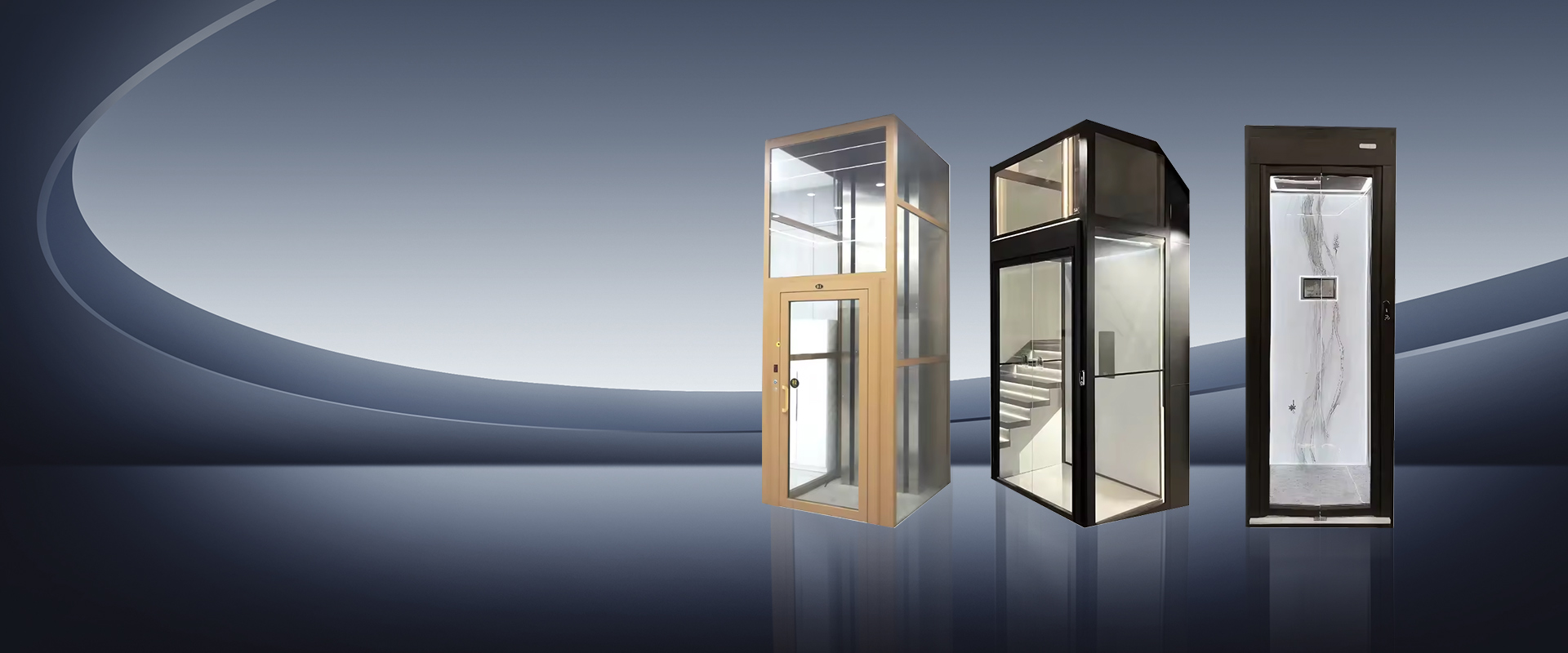
3. Key Features of Traction Gantry Home Elevator For Villa
The traction drive system is one of the main characteristics of this type of Residential Elevator. Instead of relying on a hydraulic cylinder to directly push the cabin, the traction system uses mechanical traction to move the elevator.
This configuration can provide stable acceleration and deceleration while supporting frequent residential operation.
Traction technology is also widely used in residential and commercial elevator applications because of its mature operating principle and flexible system design.
The gantry structure provides a dedicated framework for supporting elevator components. It can be adapted to different architectural conditions and may help simplify structural planning for certain villa projects.
For renovation projects, a customized gantry arrangement can be particularly useful when the original building was not designed with a conventional elevator shaft.
Space efficiency is an important consideration in private villas. A well-designed home elevator should provide useful vertical transportation without unnecessarily occupying valuable living space.
The cabin and supporting structure can be planned around the available building dimensions.
Depending on the project, the elevator can be positioned near:
Staircases
Entrances
Living rooms
Bedrooms
Balconies
Corridors
Garage areas
Outdoor walls
Villa Elevators do not necessarily need to follow one fixed cabin size. Cabin dimensions can be adjusted according to the available space and required passenger capacity.
A smaller cabin may be suitable for a compact villa, while a larger cabin can provide easier access for several passengers or people carrying luggage.
Safety is a fundamental requirement for residential elevators.
A properly configured traction gantry elevator may include:
Overspeed protection
Emergency braking
Door safety protection
Limit switches
Emergency stop function
Safety interlock
Emergency lighting
Alarm system
Backup power
Mechanical safety devices
The exact safety configuration should comply with applicable local elevator codes and certification requirements.
The elevator is often part of the villa's interior or exterior architecture. Therefore, appearance can be customized.
Common design choices include stainless steel, glass, aluminum, painted metal, and other decorative finishes.
The cabin color, handrails, lighting, control panel, door design, and flooring can also be coordinated with the architectural style of the villa.
4. Advantages of a Traction Gantry Home Elevator For Villa
One of the biggest advantages of installing a villa elevator is improved accessibility.
Stairs can become inconvenient for elderly residents, children, people carrying heavy objects, or family members with limited mobility. A home elevator provides an easier way to move between floors.
It can also make upper floors more practical for everyday living.
A multi-story villa may include bedrooms on upper floors, entertainment areas, offices, storage rooms, and terraces.
Instead of repeatedly using stairs, residents can use the elevator to move between floors quickly and comfortably.
A traction gantry system can be considered for renovation projects where installing a conventional elevator shaft is difficult.
The supporting structure can be engineered around the existing building layout, although a professional structural assessment is required before installation.
Depending on the building design and product configuration, a traction gantry home elevator can be installed in different positions.
Possible installation locations include an internal shaft, external structure, stairwell area, balcony, or another suitable vertical opening.
The final installation method depends on local construction regulations and structural conditions.
Traction elevator technology can offer efficient operation when properly designed and selected.
Energy consumption depends on factors such as motor capacity, elevator load, travel distance, frequency of use, control technology, lighting, standby power consumption, and operating conditions.
Homeowners should evaluate both initial purchase price and long-term operating costs.
A villa elevator can increase the functional value of a multi-floor residence.
It makes upper floors more accessible and can improve the usability of the entire house. For some properties, accessibility improvements may also contribute to long-term property attractiveness.
5. Applications
The primary application is private villa transportation.
A two-story or multi-story villa can use the elevator to connect bedrooms, living areas, kitchens, entertainment rooms, and other spaces.
Large residential properties often have multiple floors and spacious layouts. A customized traction gantry elevator can provide convenient vertical transportation while complementing premium architectural designs.
Self-built houses frequently have unique floor layouts that do not match standardized elevator dimensions.
A customized elevator can be designed according to the building's available space and floor height.
A duplex home can benefit from a Compact Residential Elevator that connects the two primary living levels.
For households planning long-term occupancy, an elevator can also provide improved accessibility as family needs change.
Older villas may not have an elevator installed during their original construction.
A traction gantry system can be evaluated as a solution for adding vertical transportation during renovation.
An elevator can make a multi-floor home easier to use for elderly family members.
Instead of requiring residents to climb stairs several times each day, the elevator can provide direct access between important living areas.
6. How to Choose the Right Traction Gantry Home Elevator For Villa
Choosing an elevator should begin with an assessment of the building rather than simply selecting a product based on appearance.
First determine how many floors the elevator needs to serve.
The required travel distance and number of stops affect the elevator configuration and control system.
Consider the number of passengers and the type of items that may be transported.
For example, a smaller capacity may be sufficient for one or two users, while larger families may prefer a higher-capacity cabin.
Measure:
Shaft width
Shaft depth
Pit area
Overhead space
Door opening
Floor height
Machine installation area
Accurate measurements help engineers determine whether the proposed elevator configuration is suitable.
Door opening direction and position should match the villa's floor layout.
Different floors may require different landing configurations depending on the building structure.
The cabin should provide sufficient space while maintaining the desired architectural appearance.
For villa projects, homeowners often consider stainless steel, glass panels, decorative metal, lighting, flooring, and handrails.
7. Installation Guide
Installation should be completed by qualified elevator professionals according to the approved engineering design and applicable local regulations.
Before production, technicians should evaluate the building.
The survey should identify:
Installation location
Floor height
Available shaft dimensions
Structural support
Electrical supply
Door positions
Installation access
Safety requirements
The building should be prepared according to the elevator installation drawings.
Depending on the design, this may include preparing the elevator shaft, structural supports, openings, anchor points, or gantry foundation.
The gantry structure is installed and aligned according to engineering specifications.
Correct alignment is important for stable elevator operation.
Guide rails are installed vertically to guide the elevator cabin.
The rails must be properly aligned and securely fixed.
The traction machine, ropes, sheaves, counterweight components, and associated equipment are installed.
Technicians then perform mechanical adjustment and inspection.
The elevator cabin and door system are installed.
Interior finishes should be protected during the remaining construction work.
The controller, control panel, sensors, switches, lighting, alarm system, and other electrical components are connected.
Before normal use, the elevator should undergo testing and commissioning.
Testing may include:
Door operation
Emergency stop
Leveling accuracy
Limit switches
Safety devices
Alarm system
Load testing
Travel operation
Acceleration and deceleration
Only after professional inspection and required approval should the elevator be placed into regular service.
8. Usage Instructions
Using a villa elevator is generally straightforward, but residents should follow basic safety practices.
Press the landing call button and wait for the cabin to arrive.
Before entering, confirm that the elevator cabin has stopped correctly and that the door is fully open.
Enter the cabin and press the desired floor button.
Avoid pressing multiple buttons unnecessarily.
Remain inside the cabin until the elevator reaches the selected floor.
Do not attempt to open the doors manually while the elevator is moving.
Keep hands, clothing, luggage, and other objects away from the door area.
Children should use the elevator under appropriate supervision.
If the elevator stops unexpectedly, remain calm.
Use the emergency alarm or communication function if provided and wait for qualified personnel.
Never attempt to climb out of the cabin through the roof or force open the landing door.
9. Maintenance Requirements
Regular maintenance is essential for reliable elevator operation.
A professional maintenance program should inspect the elevator according to the manufacturer's recommendations and local regulations.
Important maintenance areas include:
Technicians should inspect the traction machine, bearings, braking components, and related mechanical parts.
Where wire ropes are used, their condition should be inspected regularly for wear, corrosion, deformation, or other abnormalities.
Guide rails should remain properly aligned and securely fixed.
Door tracks, locks, sensors, and opening mechanisms should be inspected to ensure reliable operation.
Safety switches, emergency systems, overspeed protection, and other safety components should be tested according to the required maintenance schedule.
Controllers, wiring, sensors, lighting, buttons, and electrical connections should be inspected by qualified technicians.
10. Factors Affecting Traction Gantry Home Elevator Cost
The cost of a Traction Gantry Home Elevator For Villa varies considerably from one project to another.
Important cost factors include:
Elevator capacity
Number of floors
Travel height
Cabin dimensions
Door configuration
Traction machine specification
Gantry structure
Shaft construction
Interior materials
Control system
Safety equipment
Installation requirements
Transportation
Local certification
Building modification work
For this reason, a reliable quotation should be based on project-specific technical information rather than a generic product price.
A buyer requesting a quotation should provide floor plans, elevator location, floor-to-floor height, desired capacity, number of stops, available shaft dimensions, and preferred interior design whenever possible.
11. Why Customization Matters for Villa Elevators
Every villa has a different architectural structure.
A standardized elevator may not always fit the available space or aesthetic requirements. Customization allows the elevator system to be adapted to the building.
Customization may cover:
Cabin size
Door dimensions
Door position
Travel height
Number of stops
Rated capacity
Elevator speed
Cabin materials
Exterior structure
Lighting
Control panel
Flooring
Handrails
Decorative finishes
This makes a traction gantry home elevator particularly suitable for custom villa construction and renovation projects.
12. Safety Considerations
Safety should always be the first priority when selecting and operating a home elevator.
Homeowners should confirm that the elevator has appropriate safety systems and that the complete installation complies with applicable local standards.
Professional installation is essential because incorrect structural installation, electrical wiring, door alignment, or safety-device configuration can create serious risks.
The elevator should also receive regular inspection and maintenance.
Users should never overload the elevator, interfere with safety devices, force doors open, or allow children to play inside the elevator.
13. Traction Gantry Home Elevator vs. Traditional Stair Access
Stairs remain an essential part of villa architecture, but an elevator can provide additional convenience.
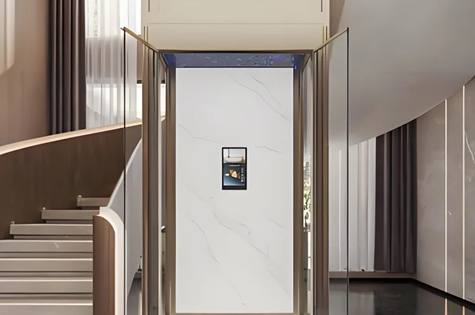
Accessibility | High | Lower for mobility-limited users |
Multi-floor Convenience | High | Requires physical climbing |
Luggage Transportation | Convenient | Less convenient |
Elderly-Friendly | Yes | More difficult |
Daily Convenience | High | Standard |
Space Requirement | Requires dedicated planning | Usually integrated into building |
Initial Investment | Higher | Lower |
For a multi-story villa, an elevator and staircase can work together rather than replacing one another. The stairs remain an important emergency and alternative access route, while the elevator provides convenient everyday transportation.
14. Frequently Asked Questions
It is a residential elevator using traction drive technology combined with a gantry-style supporting structure. It is designed for multi-floor villas and private residences.
The number of floors depends on the specific elevator design and building requirements. Many residential systems are configured for approximately two to six floors, but the actual range should be confirmed according to the selected model.
Yes. It is specifically suitable for many villa, duplex, self-built house, and residential applications where convenient vertical transportation is required.
Yes. Depending on the manufacturer and project, cabin dimensions, capacity, door configuration, materials, appearance, travel height, and other specifications can be customized.
A traction gantry home elevator may be suitable for an existing villa renovation, provided the building can support the required structural and installation conditions.
A professional site survey should be completed before confirming the design.
The price depends on capacity, floors, travel height, cabin size, traction equipment, gantry structure, doors, safety devices, installation, customization, transportation, and local certification.
A project-specific quotation is therefore more accurate than a standard price.
Traction elevators can provide efficient operation, particularly when the drive system, motor, controller, and elevator capacity are appropriately matched to the application.
Actual energy consumption depends on usage frequency and system configuration.
Yes. Regular maintenance helps keep mechanical, electrical, door, control, and safety components operating correctly.
Maintenance should be performed by qualified professionals.
Yes. Improving accessibility is one of the main reasons homeowners install elevators in multi-floor residences.
A properly designed elevator can reduce the need for elderly residents to repeatedly use stairs.
In many projects, yes. Materials, lighting, flooring, handrails, control panels, wall finishes, and other decorative elements can be customized.
Some traction gantry elevator designs can be adapted for suitable outdoor applications. Outdoor installation requires appropriate weather protection, structural design, drainage, electrical protection, and compliance with local requirements.
Useful information includes the number of floors, floor-to-floor height, required capacity, approximate cabin size, shaft dimensions, door locations, installation environment, preferred materials, and project location.
Providing architectural drawings can make the quotation process more accurate.
15. Conclusion
A Traction Gantry Home Elevator For Villa provides a practical way to improve vertical accessibility in modern multi-floor homes. With traction drive technology, gantry structural support, customizable dimensions, multiple safety systems, and flexible architectural options, it can be adapted to a wide range of villa projects.
The most important factors when selecting a home elevator are not only the purchase price but also the building structure, capacity, number of floors, travel height, installation conditions, safety configuration, maintenance requirements, and long-term reliability.
For new villa construction, the elevator can be incorporated into the architectural design from the beginning. For existing villas, a professional site survey can determine whether a gantry-based installation is suitable.
A well-designed traction gantry elevator can make daily movement between floors easier, improve accessibility for elderly family members, simplify transportation of luggage and household items, and increase the functional value of a multi-story residence.
For buyers comparing different Traction Gantry Home Elevator Solutions, the best approach is to provide detailed building information and define the required capacity, floors, dimensions, appearance, and installation conditions before requesting a technical proposal and quotation. This ensures that the final elevator system is appropriately matched to the villa rather than selected only according to a generic specification.
 RELATED
 RELATED
This website uses cookies to ensure you get the best experience on our website.
 ไทย
ไทย Indonesia
 Tiếng Việt
 Filipino



 Phone
Phone