

1. Introduction
A Residential Traction Elevator is a compact vertical transportation solution designed specifically for private houses, villas, duplex homes, townhouses, and other low-rise residential buildings. Unlike conventional Hydraulic Home Elevators, a traction elevator uses an electric traction machine, ropes or belts, a sheave, counterweight, guide rails, and a control system to move the elevator cabin smoothly between floors. This configuration provides efficient vertical transportation while offering a comfortable, quiet, and modern solution for residential applications.
Residential traction elevators are increasingly used in new house construction, luxury villas, home renovation projects, multi-level residences, and private buildings where convenient access between floors is important. They can improve daily mobility, increase accessibility, and add long-term value to residential properties.
Modern traction technology allows manufacturers to design compact Home Elevators with efficient motors, advanced controllers, automatic leveling, emergency safety systems, and customizable cabins. Depending on the building structure and project requirements, a residential traction elevator can be configured for different floor heights, cabin dimensions, entrance arrangements, finishes, and control options.
One important advantage of traction technology is its efficient operation. The counterweight helps balance the elevator load, reducing the amount of energy required to move the cabin. This makes a Traction Home Elevator suitable for homeowners who want reliable transportation between floors while maintaining reasonable energy consumption.
A residential traction elevator can also provide a more refined appearance than traditional accessibility equipment. Cabin interiors can be customized with stainless steel, glass, wood-effect panels, decorative laminates, LED lighting, handrails, mirrors, and other architectural finishes. As a result, the elevator can be integrated into modern residential interiors rather than appearing as an additional mechanical installation.
For villas and private houses with limited space, compact traction elevator configurations can be particularly useful. The elevator may be installed inside the building, adjacent to a staircase, or in a dedicated elevator shaft depending on the building layout and applicable local regulations.
2. What Is a Residential Traction Elevator?
A residential traction elevator is a home elevator that operates using a traction drive system. The main components generally include a traction machine, traction sheave, suspension ropes or belts, counterweight, elevator cabin, guide rails, controller, landing doors, safety devices, and electrical control equipment.
When the elevator receives a floor command, the controller sends a signal to the traction machine. The traction machine rotates the sheave, which moves the suspension system and elevator cabin along the guide rails. The counterweight balances a significant portion of the cabin and passenger load, allowing the motor to operate efficiently.
The control system continuously monitors elevator movement, position, door status, safety circuits, and other operating conditions. Automatic leveling technology helps position the cabin accurately at the selected floor so passengers can enter and exit safely and comfortably.
Residential traction elevators can be designed for different building configurations. Common applications include two-story, three-story, four-story, and other low-rise residential structures. The final design depends on the number of floors, travel height, available shaft space, expected passenger capacity, local regulations, and architectural requirements.
3. Typical Parameters of a Residential Traction Elevator
The following parameters represent common configuration ranges for residential traction elevators. Actual specifications should be confirmed according to the selected model and project requirements.
Product Type | Residential Traction Elevator |
Application | Private Houses, Villas, Duplex Homes, Townhouses |
Drive Type | Electric Traction Drive |
Typical Capacity | Approximately 250–630 kg |
Passenger Capacity | Approximately 2–8 Persons |
Typical Speed | Approximately 0.3–1.0 m/s |
Number of Floors | Commonly 2–6 Floors |
Drive System | Traction Machine With Counterweight |
Control System | Microcomputer / VVVF Control |
Door Type | Automatic or Manual Depending on Configuration |
Cabin Material | Stainless Steel, Glass, Wood-Effect, Decorative Panels |
Entrance Configuration | Single Entrance or Customized Arrangement |
Power Supply | According to Local Electrical Standard |
Installation | Indoor or Suitable Customized Residential Installation |
Safety System | Multiple Safety and Emergency Protection Devices |
Lighting | LED Cabin Lighting |
Leveling | Automatic Floor Leveling |
Control | Cabin and Landing Controls |
Emergency Function | Emergency Lighting / Alarm / Manual Rescue System |
Customization | Cabin, Door, Size, Capacity, Finish, Configuration |
These specifications are provided for reference only. The final technical parameters should be determined after reviewing the building structure, shaft dimensions, travel height, local electrical requirements, and elevator safety regulations.
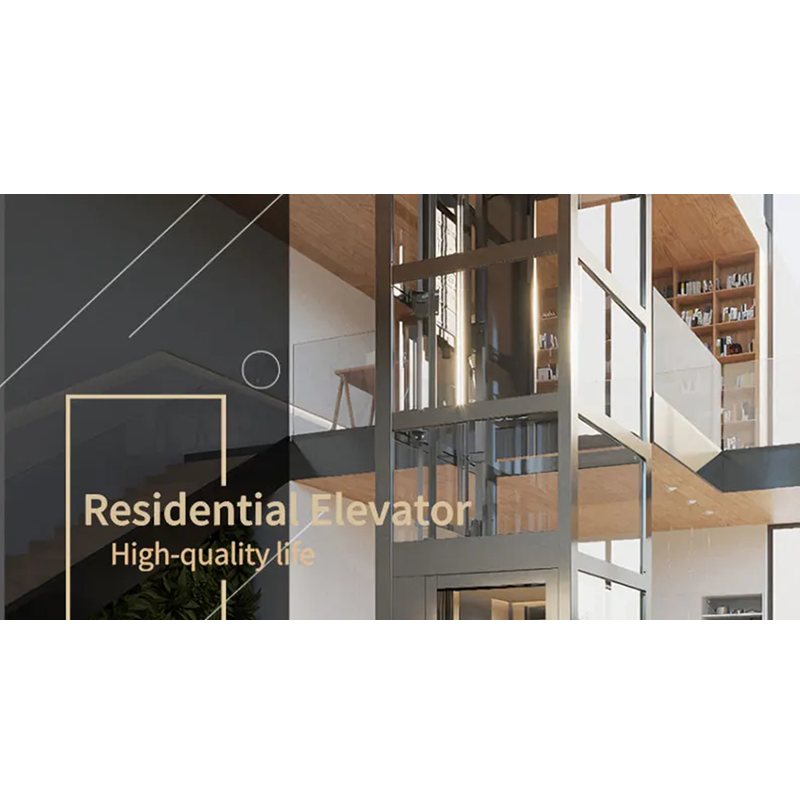
4. Main Features
The traction drive system uses a motor and sheave together with suspension ropes or belts and a counterweight. Because the counterweight balances the elevator cabin and part of the rated load, the motor does not need to lift the entire elevator mass directly.
This design can contribute to efficient energy consumption and smooth operation, making traction technology suitable for frequent residential use.
Modern traction elevators can use variable-frequency drive technology to control acceleration and deceleration. This allows the elevator to start and stop gradually, reducing sudden movement and improving passenger comfort.
Accurate leveling also helps minimize the height difference between the cabin floor and landing floor.
Residential buildings often have limited available space. A Home Traction Elevator can be engineered around the building layout to maximize available floor area.
Depending on the configuration, compact cabins, optimized machine-room arrangements, and customized shaft dimensions can be considered.
The elevator cabin can be customized according to the architectural style of the home. Popular options include stainless steel cabins, panoramic glass elements, decorative wall panels, wood-effect finishes, mirrors, ceiling lighting, and customized handrails.
This makes the elevator suitable for both contemporary and traditional residential interiors.
Automatic leveling helps the cabin stop at the correct position at each landing. This feature is especially important for residential accessibility because it makes entering and leaving the cabin easier.
A modern residential traction elevator uses an integrated control system to manage floor selection, door operation, speed control, leveling, safety circuits, and fault monitoring.
Variable-frequency control can improve ride quality while reducing unnecessary mechanical stress.
Safety is one of the most important considerations in Residential Elevator design. Depending on the configuration and applicable standards, a traction elevator may include door interlocks, overspeed protection, safety gear, limit switches, emergency stop functions, overload protection, emergency lighting, alarm systems, and other protective devices.
All safety equipment should be selected and installed according to the applicable local elevator regulations.
5. Advantages of Residential Traction Elevators
The counterweight system allows the traction motor to work more efficiently because it balances the elevator cabin and a portion of the passenger load. For residential buildings where the elevator is used repeatedly every day, efficient operation can be an important consideration.
Traction technology combined with modern variable-frequency control provides controlled acceleration and deceleration. This creates a smooth passenger experience and reduces sudden starts and stops.
A residential traction elevator can provide convenient transportation between multiple floors. This is particularly useful in villas, duplex houses, and multi-story private residences.
Residential traction elevator systems can be customized according to the available shaft dimensions. Depending on the product configuration, the system may be designed to reduce the space required for mechanical equipment.
An elevator can improve the usability and accessibility of a multi-level home. It may also make the property more attractive to families looking for long-term accessibility and convenient vertical transportation.
Homeowners, architects, contractors, and developers can select cabin dimensions, door arrangements, interior finishes, lighting, control panels, and other options according to project requirements.
A residential elevator can reduce the need to use stairs when moving between floors. This is valuable for elderly residents, people with limited mobility, families with young children, and homeowners transporting luggage or household items.
6. Residential Applications
Large villas often have several residential floors. A traction home elevator can provide convenient vertical transportation while complementing the architectural design of the property.
It can be installed near the main staircase, in a central shaft, or in another suitable position determined during the architectural planning stage.
Duplex homes can benefit from a compact elevator because residents frequently move between two or more levels. A residential traction elevator provides an alternative to stairs and can improve convenience for everyday activities.
Townhouses commonly have narrow floor plans with multiple vertical levels. A compact traction elevator can provide better accessibility without requiring a large amount of additional floor space.
Luxury home developments often require elevators with premium finishes and customized interiors. Traction elevators can be configured with panoramic glass, decorative stainless steel, customized lighting, and architectural cabin finishes.
A residential traction elevator can also be considered during renovation or remodeling projects. However, the building must be evaluated to determine whether a suitable shaft, structural support, electrical supply, and installation space are available.
For homes designed with long-term accessibility in mind, an elevator can reduce dependence on stairs and make different floors easier to access.
7. How a Residential Traction Elevator Works
The operation of a traction home elevator can be summarized in several steps.
The passenger presses the landing call button. The control system receives the request and determines the appropriate elevator movement.
When the elevator reaches the required landing, the landing and cabin door systems operate according to the programmed control sequence.
The passenger enters the cabin and selects the desired destination floor using the cabin operating panel.
The controller activates the traction machine. The machine rotates the traction sheave, causing the suspension system to move.
The cabin moves vertically along the guide rails while the counterweight moves in the opposite direction. Sensors continuously monitor position and movement.
As the elevator approaches the destination floor, the control system reduces the speed smoothly.
The elevator performs final leveling so the cabin floor aligns with the landing floor.
After the safety conditions are confirmed, the doors open and passengers can leave the cabin.
8. Installation Considerations
Before purchasing or installing a residential traction elevator, several technical factors should be evaluated.
The required shaft size depends on cabin dimensions, door configuration, counterweight arrangement, guide rails, and equipment layout. The manufacturer should receive accurate architectural drawings before finalizing the design.
The required pit depth varies according to the elevator design. If the building has limited excavation possibilities, a specialized low-pit configuration may need to be considered.
The available space above the top landing must meet the requirements of the selected elevator system and applicable safety standards.
The electrical supply must match the elevator controller and traction machine. Voltage, frequency, phase configuration, grounding, and protection equipment should be confirmed before installation.
The building structure must be capable of supporting the elevator shaft, guide rails, landing doors, and associated components.
Single-side entrances are common, but through-car or other configurations may be possible for certain residential layouts.
Elevator requirements differ between countries and regions. The project should comply with the applicable elevator codes, building regulations, electrical standards, inspection requirements, and accessibility requirements.
9. Usage Instructions
Proper operation helps maintain safe and reliable elevator performance.
Check that the landing area is clear and that there are no visible signs of damage to the doors, cabin, or control panel.
Wait until the doors are completely open. Enter carefully and avoid blocking the door sensors.
Press the corresponding destination button once. Avoid repeatedly pressing buttons unless the elevator control system specifically requires it.
Remain inside the cabin until the elevator reaches the selected floor. Do not attempt to open the doors manually while the elevator is moving.
Do not exceed the rated capacity of the elevator. Heavy items should be distributed evenly within the cabin rather than concentrated in one location.
Do not force the elevator doors open or closed. Allow the automatic door system to complete its operating cycle.
If the elevator stops unexpectedly, remain calm and use the emergency alarm or communication system where provided. Do not attempt to climb out of the elevator cabin without professional assistance.
10. Maintenance Requirements
Regular maintenance is essential for long-term elevator performance.
Maintenance should include inspection of:
Traction machine
Suspension ropes or belts
Traction sheave
Guide rails
Door system
Door interlocks
Safety gear
Overspeed protection
Limit switches
Electrical control cabinet
Drive system
Cabin lighting
Emergency lighting
Alarm system
Floor leveling system
Fasteners and mechanical connections
The maintenance interval should follow the manufacturer's recommendations and local regulatory requirements.
Professional elevator technicians should perform inspections and maintenance. Homeowners should not attempt to repair traction machinery, safety devices, electrical control systems, or other critical elevator components themselves.
11. Common Problems and Solutions
Possible causes include power failure, activated safety circuit, door not fully closed, controller fault, or emergency stop activation.
Check the power supply and make sure all doors are properly closed. If the problem continues, contact a qualified elevator technician.
A traction elevator may stop because of a safety protection activation, power interruption, controller fault, or sensor problem.
Passengers should remain inside the cabin and use the emergency communication or alarm function. Professional personnel should handle the rescue procedure.
Possible causes include an obstruction in the doorway, dirty door sensors, door-control problems, or an interlock issue.
Remove any visible obstruction and allow the system to attempt normal operation. If the door remains open, professional inspection is required.
Noise may originate from the traction machine, guide shoes, suspension system, doors, or other mechanical components.
Unusual sounds should not be ignored. A qualified technician should inspect the elevator to identify the cause.
Incorrect leveling may result from sensor problems, control-system calibration, or mechanical issues.
The elevator should be inspected and recalibrated by qualified maintenance personnel.
12. Safety Features
Residential traction elevators are designed with multiple safety layers. Depending on the selected model, typical safety functions may include:
Door interlock protection
Overspeed governor
Safety gear
Emergency stop function
Upper and lower limit protection
Overload protection
Emergency lighting
Alarm system
Automatic leveling
Door obstruction detection
Electrical safety monitoring
Brake monitoring
Emergency rescue function
Safety configuration varies according to elevator model and local regulations. The complete safety system should be confirmed before installation.
13. Customization Options
Residential traction elevators can be customized to match different building requirements.
Cabin dimensions can be selected according to passenger capacity, wheelchair accessibility, available shaft space, and building structure.
Common materials include stainless steel, glass, decorative panels, wood-effect materials, and customized interior finishes.
Door finishes can be coordinated with the cabin and surrounding architecture. Automatic doors can also improve convenience for residential users.
LED lighting can provide comfortable cabin illumination while contributing to a modern interior appearance.
The cabin control panel can include floor buttons, door controls, alarm buttons, emergency communication, and other operating functions.
Landing doors and frames can be customized to complement interior walls, flooring, doors, or other architectural elements.
14. Why Choose a Residential Traction Elevator?
A residential traction elevator provides a combination of efficient drive technology, comfortable operation, flexible design, and convenient accessibility.
For homeowners, the elevator can make daily movement between floors easier. For architects and developers, it provides additional flexibility when designing multi-level residential properties. For renovation projects, customized dimensions and finishes can help integrate the elevator into an existing architectural environment.
Compared with traditional stair-only access, a home elevator provides a convenient transportation option for residents carrying groceries, luggage, laundry, household equipment, or other items between floors.
The traction system also provides an efficient mechanical solution because the counterweight reduces the lifting effort required from the motor.
15. How to Select the Right Residential Traction Elevator
When selecting a residential traction elevator, buyers should consider several important factors.
Identify the total number of floors served and the required travel height.
Choose a suitable rated load according to the number of regular users and the intended application.
Provide accurate shaft width, shaft depth, pit depth, headroom, and landing dimensions.
Determine whether a single entrance, opposite entrance, or another configuration is required.
Choose interior materials and finishes according to the home's architectural style.
The power supply must be compatible with the selected traction machine and control system.
Confirm the applicable elevator standards, inspection requirements, building permits, and installation regulations.
Choose a supplier capable of providing installation guidance, spare parts, maintenance support, technical documentation, and long-term service.
16. Residential Traction Elevator vs. Hydraulic Home Elevator
Both traction and hydraulic systems can be used for residential elevators, but their operating principles are different.
A traction elevator uses a motor, traction sheave, suspension system, and counterweight. A hydraulic elevator uses hydraulic pressure to move a piston or cylinder.
Traction systems can provide efficient operation and are widely suitable for multi-level residential buildings. Hydraulic systems can be useful in projects where specific structural or installation conditions favor hydraulic technology.
The best choice depends on travel height, available space, building structure, energy requirements, installation conditions, local regulations, and project budget.
17. Residential Traction Elevator for Modern Homes
Modern homes increasingly combine accessibility, energy efficiency, architectural design, and smart technology. A residential traction elevator can support these requirements by providing reliable vertical transportation in a compact and customizable format.
With modern control technology, the elevator can deliver smooth acceleration, accurate stopping, automatic door operation, and multiple safety functions.
For premium villas, the elevator cabin can become part of the interior design. Glass panels, stainless steel finishes, decorative lighting, mirrors, and customized control panels can create a modern appearance.
For practical family homes, the focus may instead be on compact dimensions, easy operation, reliability, and long-term maintenance.
18. Application Benefits for Different Users
A residential elevator makes moving between floors easier and more convenient for the entire family.
An elevator reduces the need to use stairs repeatedly and can support long-term residential accessibility.
A suitably configured elevator can provide easier access between residential floors.
A properly designed and maintained residential elevator provides a convenient transportation option under appropriate adult supervision and according to safety requirements.
Installing an elevator can improve the functionality and usability of a multi-story residence.
Customizable elevator dimensions, cabin finishes, doors, and layouts provide greater architectural flexibility.
A clearly specified traction elevator system can be integrated into residential construction planning from an early stage.
19. Frequently Asked Questions
A residential traction elevator is a home elevator that uses an electric traction machine, sheave, suspension system, and counterweight to move the elevator cabin between floors.
Capacity depends on the specific model. Common residential configurations can range from approximately 250 kg to 630 kg, but the final rated capacity must be confirmed according to the selected design.
Residential traction elevators are commonly used in low-rise buildings with approximately two to six floors. The actual travel height depends on the elevator model and building requirements.
Yes. Traction elevators are widely suitable for villas and multi-level private residences because they can provide smooth operation, efficient transportation, and flexible cabin design.
Traction elevators can offer efficient operation because the counterweight balances the cabin and part of the load, reducing the work required from the traction motor.
Yes. Depending on the manufacturer and model, cabin dimensions, materials, lighting, doors, control panels, finishes, and other components can be customized.
Potentially. A structural and architectural assessment is required to determine whether sufficient space is available for the shaft, pit, headroom, guide rails, landing doors, electrical equipment, and other components.
The requirement depends on the elevator configuration. Some traction systems use machine-room-less or compact machine-room arrangements, while other designs require dedicated machinery space.
Typical residential traction elevator speeds may range from approximately 0.3 to 1.0 m/s, depending on the model and project requirements.
Modern traction elevators can operate quietly when properly designed, installed, and maintained. Noise levels depend on the traction machine, guide system, doors, building structure, and installation quality.
Regular maintenance includes inspection of the traction machine, suspension system, guide rails, doors, safety devices, controller, electrical components, leveling system, and other critical equipment.
The specific emergency function depends on the elevator configuration. Systems may include emergency lighting, alarm functions, emergency communication, battery-supported rescue functions, or manual rescue procedures.
Some elevator systems can be adapted for outdoor applications, but outdoor installation requires suitable weather protection, structural design, electrical protection, and equipment specifications.
Important factors include shaft dimensions, pit depth, headroom, travel height, floor count, cabin capacity, door arrangement, electrical supply, structural conditions, local regulations, and maintenance access.
Installation time depends on the building condition, elevator configuration, shaft preparation, number of floors, site accessibility, and local inspection requirements. The supplier should provide a project-specific installation schedule.
20. Conclusion
A Residential Traction Elevator is a practical vertical transportation solution for villas, private houses, duplex homes, townhouses, and other multi-level residential buildings. Its traction drive technology combines an electric motor, suspension system, counterweight, guide rails, and intelligent control system to provide smooth and efficient movement between floors.
Key advantages include efficient traction operation, comfortable travel, automatic leveling, customizable cabin design, multiple safety functions, and suitability for a wide range of residential layouts. With appropriate engineering and professional installation, a residential traction elevator can improve accessibility and everyday convenience while integrating naturally into modern home architecture.
When selecting a residential traction elevator, buyers should not focus only on rated capacity or appearance. Shaft dimensions, travel height, electrical requirements, structural conditions, safety configuration, local standards, maintenance requirements, spare-parts availability, and after-sales service are equally important.
For a new villa or residential construction project, elevator planning should ideally begin during the architectural design stage. For existing homes, a professional site assessment should be completed before selecting the final elevator model.
By combining reliable traction technology with flexible customization and professional installation, a residential traction elevator can provide a durable, comfortable, and convenient transportation solution for modern multi-story homes.
 RELATED
This website uses cookies to ensure you get the best experience on our website.
 ไทย
ไทย Indonesia
 Tiếng Việt
 Filipino



 Phone
Phone