

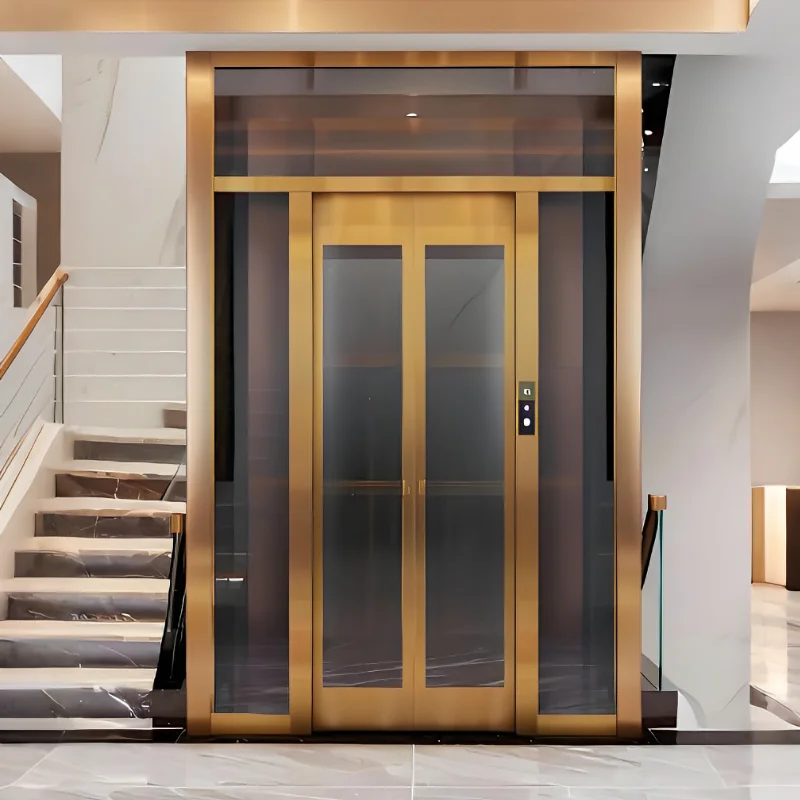
A villa elevator is no longer seen as a luxury reserved for large mansions or commercial buildings.
Today, more homeowners are choosing a Residential Villa Elevator to improve accessibility,
increase comfort, and add long-term property value. Whether you are planning a new home, renovating an existing
villa, or upgrading for aging-in-place needs, it is important to understand the key factors before
installing a villa elevator.
This guide provides a complete overview of villa elevator installation, including definition,
benefits, planning considerations, technical requirements, common elevator types, safety features, and a
practical specification table. The information is general, industry-focused, and suitable for use in blog posts,
category pages, landing pages, or SEO-driven content hubs.
A villa elevator is a compact vertical transportation system designed for private homes,
duplexes, townhouses, and luxury residences. Unlike heavy-duty commercial lifts, a residential villa elevator is
typically built for lower passenger volumes, lower travel heights, and a more customized architectural fit.
Villa elevators can be installed in new constructions or retrofitted into existing homes. They may use different
drive systems such as traction, hydraulic, vacuum, or screw-driven mechanisms. The right choice depends on the
building structure, available space, design expectations, budget, and local code requirements.
Installing a villa elevator offers both practical and lifestyle benefits. For many families, it is an investment
that supports long-term convenience and accessibility. For others, it is a design feature that enhances the overall
value and sophistication of the property.
Before any villa elevator installation, homeowners should review the building layout, technical
constraints, usage needs, and compliance requirements. A Residential Elevator is a long-term building feature, so
the planning stage is just as important as the equipment itself.
The first factor to consider is space. A villa elevator needs enough room for the cab, shaft, pit depth, overhead
clearance, machine space, and door openings. In some cases, the elevator can be installed in an existing stairwell,
corner area, or external shaft. In others, structural modifications may be necessary.
Space planning affects not only installation feasibility but also elevator size, load capacity, and comfort. Compact
models can fit into smaller homes, while larger systems may require more building adaptation.
A villa elevator is usually designed for low-rise buildings, typically two to four stops. The number of floors and
total travel height influence the drive system, speed, power requirements, and cost. Homes with more levels may need
stronger structural support and a more efficient system design.
Not all residential elevators are designed for the same usage. Some are made for one or two passengers, while others
can carry a wheelchair, a caregiver, or light household items. Common capacity ranges vary depending on the elevator
type, but homeowners should consider daily use patterns before selecting a model.
If the elevator is intended for accessibility, wheelchair compatibility and cab dimensions become especially
important.
The drive system is a major technical decision in Home Elevator Installation. Different systems offer
different benefits in terms of space, energy use, maintenance, noise, and ride quality.
| Drive System | Main Features | Typical Advantages | Common Considerations |
|---|---|---|---|
| Traction Elevator | Uses ropes and counterweights for movement | Smooth ride, efficient for frequent use | May require more shaft planning and overhead space |
| Hydraulic Elevator | Powered by a hydraulic piston and fluid system | Simple operation, good for moderate travel heights | May require a machine space and periodic fluid checks |
| Vacuum Elevator | Uses air pressure differences to move the cab | Compact footprint, modern appearance | Usually supports fewer passengers and limited customization |
| Screw-Driven Elevator | Moves using a rotating screw mechanism | Good for compact residential applications | Ride speed may be lower than other systems |
Safety is one of the most important considerations before installing a villa elevator. A residential elevator should
include essential protection features such as emergency stop buttons, door interlocks, overload sensors, backup
lowering systems, and battery-powered rescue functions where applicable.
It is also critical to confirm that the elevator meets local building codes, electrical rules, accessibility
regulations, and inspection requirements. Code compliance affects both legal approval and long-term user safety.
A villa elevator requires an appropriate electrical supply. Homeowners should confirm voltage requirements, phase
compatibility, and backup support options. Energy efficiency is another growing concern, especially for long-term
household operation.
Modern residential elevators may use energy-efficient motors, LED lighting, standby mode functions, and intelligent
control systems to reduce power consumption. For homeowners focused on sustainable living, choosing an energy-aware
elevator design can be an important decision.
Since a villa elevator is installed inside a private residence, comfort matters. Homeowners should review expected
noise levels, vibration control, door operation, and stopping accuracy. A well-designed system should integrate
smoothly into daily home life without disrupting nearby rooms or sleeping areas.
One of the biggest advantages of a villa elevator is customization. Homeowners can often choose cab
materials, wall finishes, lighting, handrails, flooring, and door styles to match the interior design of the home.
Glass panels, stainless steel details, and minimalist frames are popular in modern villas.
However, aesthetics should never override technical performance. The best solution combines visual appeal with
functional reliability and safety.
The installation timeline depends on whether the villa is under construction or already completed. New-build homes
generally allow easier integration, while retrofit projects may require structural work, permits, and longer
preparation.
Homeowners should also understand how much disruption may occur during installation. Flooring, wall opening,
electrical work, and shaft construction may all affect normal living conditions. Clear scheduling helps reduce
inconvenience.
A villa elevator is a long-term mechanical system, so maintenance planning is essential. Regular inspections,
lubrication, safety testing, and component checks help extend service life and preserve performance.
Before installation, homeowners should think about future maintenance access, replacement parts, service intervals,
and emergency support availability. A good elevator is not only easy to install but also practical to maintain over
time.
From a homeowner’s perspective, the advantages of a villa elevator are both functional and financial. These are the
most common benefits cited in the Residential Lift industry.
| Benefit | Description | Homeowner Impact |
|---|---|---|
| Accessibility | Makes upper floors easier to reach for all ages | Improves daily comfort and mobility |
| Safety | Reduces stair-related accidents and physical strain | Helpful for seniors and family members with mobility needs |
| Convenience | Provides easy transport between floors | Saves time and energy in multi-level homes |
| Luxury Appeal | Adds a premium feature to the villa | Enhances the overall impression of the property |
| Property Value | May improve buyer interest and resale potential | Supports long-term investment value |
| Aging in Place | Helps residents remain in the home longer | Supports future lifestyle planning |
Exact specifications depend on the model and structural conditions, but the following table provides a general
reference for common villa elevator planning. These values are for informational purposes only and may vary based on
local regulations and manufacturer design.
| Specification | Typical Range | Notes |
|---|---|---|
| Passenger Capacity | 2 to 8 persons | Varies by cab size and system type |
| Load Capacity | 180 kg to 630 kg | Higher capacities support more users or a wheelchair |
| Travel Height | 2 to 15 meters | Typical for low-rise residential buildings |
| Speed | 0.15 m/s to 1.0 m/s | Depends on drive system and comfort requirements |
| Pit Requirement | 0 to 1500 mm | Some models require minimal or no pit |
| Overhead Clearance | 2500 mm to 4000 mm | Depends on safety and mechanical design |
| Shaft Size | Compact to custom-built | Must match cab dimensions and building structure |
| Power Supply | Single-phase or three-phase | Depends on elevator type and load requirements |
| Installation Type | New build or retrofit | Retrofit projects may need more structural adjustments |
Choosing the right villa elevator requires balancing practical need, structural compatibility, and design goals.
The ideal solution is not necessarily the most advanced or expensive system, but the one that fits the home best.
Start by identifying who will use the elevator and how often. A household with seniors or wheelchair users will need
different features than a vacation villa used occasionally by guests.
Accurate measurements are essential. This includes ceiling heights, floor openings, shaft space, door widths, and
possible routing for electrical and mechanical systems.
The structural condition of the home influences the installation method. Reinforced walls, slab load capacity, and
foundation conditions must be evaluated before selecting a final elevator configuration.
A villa elevator should complement the architectural style of the residence. Transparent cab designs, hidden
mechanisms, and premium finishes can help the elevator blend naturally with the interior.
A good elevator decision should anticipate future family needs. Even if mobility is not a current concern, planning
ahead can make the home more practical over the long term.
While each project is different, a typical villa elevator installation process includes several
general stages. Understanding them helps homeowners prepare for cost, time, and coordination.
The cost of a villa elevator can vary widely based on size, drive system, customization, installation complexity,
and local labor conditions. Instead of focusing on a single price, homeowners should understand the main cost
drivers.
| Cost Factor | Influence on Budget |
|---|---|
| Elevator type | Different systems have different equipment and installation costs |
| Building modification | Retrofitting can increase structural work expenses |
| Cab customization | Premium finishes and glass designs may add to the budget |
| Travel height | More floors usually require more materials and labor |
| Safety and control systems | Advanced features may increase initial investment |
| Maintenance plan | Service agreements affect long-term ownership costs |
Modern residential elevators often include a combination of convenience and safety features. When comparing options,
it helps to understand which features are standard and which are optional.
Homeowners sometimes compare a villa elevator with other accessibility solutions. The right choice depends on the
home layout, mobility needs, and long-term objectives.
| Solution | Best For | Main Advantage | Typical Limitation |
|---|---|---|---|
| Villa Elevator | Multi-level homes, luxury villas, aging-in-place | Most comfortable and versatile option | Higher cost and space planning needed |
| Stair Lift | Users who need seated stair assistance | Lower installation complexity | Less suitable for carrying goods or wheelchairs |
| Platform Lift | Wheelchair access over short vertical distances | Practical accessibility solution | Limited travel height and design flexibility |
The following keyword variations are commonly associated with this topic and can support SEO content planning:
villa elevator, home elevator installation, residential elevator,
private Home Lift, luxury villa elevator, compact elevator for villa,
wheelchair Accessible Home Elevator, elevator for multi-story villa, and
For many homeowners, yes. A villa elevator improves accessibility, convenience, and long-term usability. It is
especially valuable for multi-floor properties and households with elderly family members.
Yes, many villa elevators are designed for retrofit installation. However, existing homes may require structural
changes, so a site assessment is essential.
Space requirements vary by model, but Compact Residential Elevators are available for homes with limited floor
area. The shaft, pit, and overhead space must all be checked carefully.
Noise levels depend on the drive system, insulation, and installation quality. Well-designed traction and
screw-driven systems are often selected for quiet residential performance.
Before installing a villa elevator, homeowners should evaluate space, building structure, drive
system, safety features, code compliance, customization, energy efficiency, and long-term maintenance needs. A
well-planned villa elevator installation can transform daily living by making a private residence
safer, more comfortable, and more future-ready.
Whether your priority is accessibility, luxury, or property value, the most successful residential elevator project
begins with careful planning and clear technical understanding. By considering the factors outlined in this guide,
you can make a more informed decision and choose a villa elevator solution that fits your home for years to come.
```
This website uses cookies to ensure you get the best experience on our website.
 ไทย
ไทย Indonesia
 Tiếng Việt
 Filipino



 Phone
Phone
Comment
(0)